
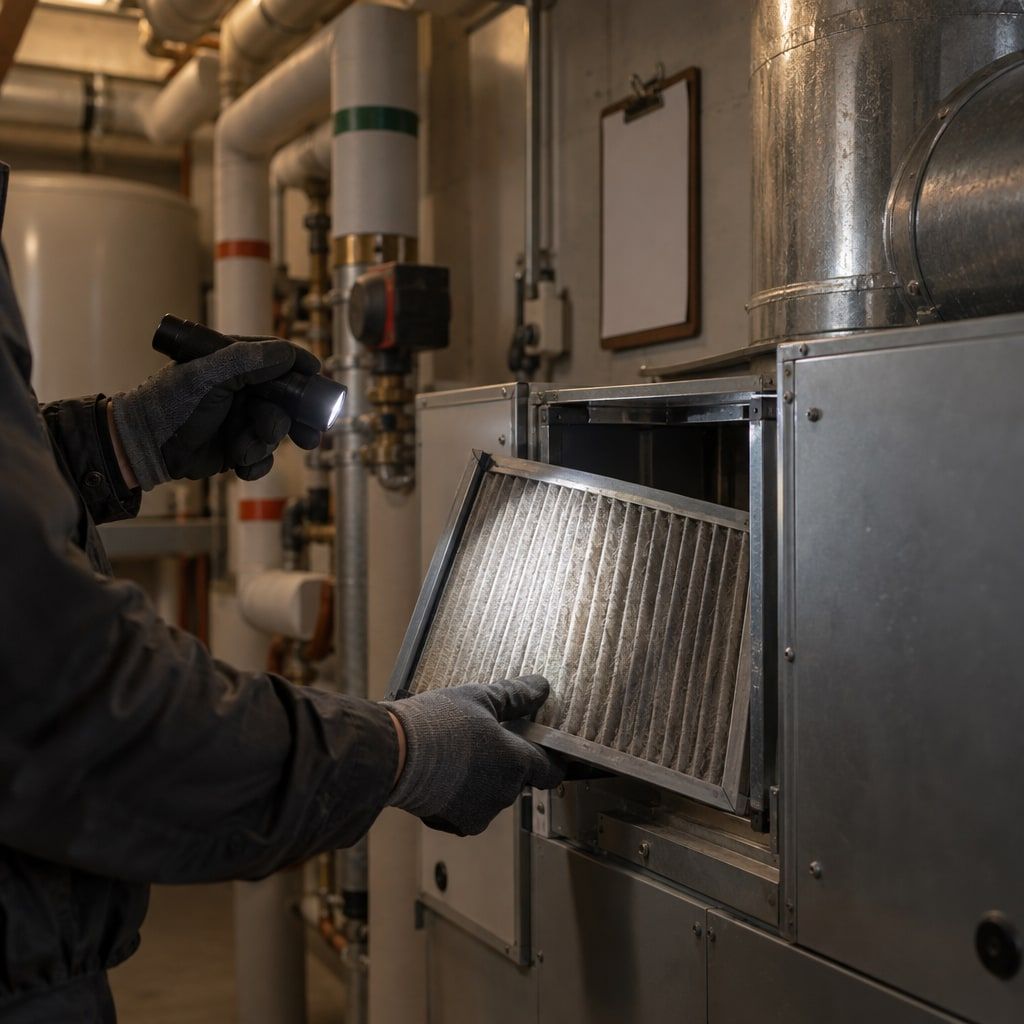
Technical Building Maintenance
Regular inspection rounds covering heating, blinds, lighting and building systems, with a written report for your managing agent before a small fault becomes a failure.
A faulty blind control on the third floor, a garage door that has been sticking for two weeks, a cellar light nobody has replaced: none of these appear on the agenda of an owners’ meeting until a tenant complains, or the small fault turns into a water-damage claim. For an owner or facility manager based outside Switzerland, the first they usually hear of it is the complaint itself, because nobody has been walking through the property, the Liegenschaft, and actually looking.
Technical building maintenance closes that gap between the large jobs that legally require a licensed specialist, such as heating servicing, and the daily reality of a building where something is always sticking, dripping or flickering. This is part of what falls under Hauswartung, property maintenance, in Switzerland, and it normally runs as a standing arrangement with a fixed schedule rather than a call placed only once something has already failed. We run regular inspection rounds, small fixes and a clear fault-reporting process for properties across March SZ, the Zürcher Oberland and the Wil SG area, so the managing agent hears about a problem before it becomes an emergency.
What we do, in order
Each round follows the same route through the property: plant rooms and cellars, stairwell and shared areas, outdoor grounds with garages and driveways. In the cellar we check backflow valves, sump pumps and water softeners for function, so heavy rain does not cause water to back up into the building. On the heating system we check visible readings such as pressure and listen for unusual noise or signs of damp, without working on the system ourselves. Blinds, garage doors and door operators are checked for function, and faulty bulbs in communal lighting are replaced. Anything beyond a minor fix is documented with a photo and a short description and reported directly to the managing agent, with an initial view on whether it is urgent or can wait for the next round. In autumn, before the heating season, outdoor lighting and automatic blind systems get an extra check, since both see heavier use again in winter, often after months of little use. In spring we check that gutters and drainage channels are clear after winter, before the first heavy rain arrives.
Where this typically goes wrong
The biggest mistake is organising technical checks reactively only: something happens, a tenant calls, and only then does anyone get called out. By that point a dripping joint has often become real damage. The second mistake is around scope: many managing agents are not entirely sure which work a caretaker can carry out and which must go to a licensed specialist, for example on gas heating, electrical installations or lifts. We work deliberately within that boundary: visual inspection and reporting, yes; work on systems that require a permit or licence, no. That protects the managing agent from a small repair turning into a liability question. A third, often underestimated point is documentation. Without a written report, knowledge about a property disappears the moment one person moves on. A logged inspection round stays traceable even when the managing agent’s own staff changes. And finally, an owner who only finds out at the heating specialist’s annual service visit that a system has been making strange noises for weeks has lost an expensive window of time. A short inspection round every one to two weeks closes exactly that gap between the big, scheduled service appointments.
Who this is for
This is aimed first at property management companies and managing agents, Bewirtschafter, who want consistent, documented technical checks across several properties, with one point of contact instead of a different tradesperson for every small issue. It also suits owners’ associations that want to show at the annual meeting that building systems are checked regularly, and owners of multi-unit buildings with no local caretaker of their own. Commercial properties with their own building technology benefit too, since a lighting or door-automation failure there directly disrupts the tenant companies’ operations.
Process and quote
We start with a walk-through of the property, noting plant rooms, systems and the condition of the building envelope. From that we build a maintenance plan with an inspection rhythm and a fixed price per month or year, the Offerte, which fits cleanly into a service charge statement. Small fixes are included in the round; larger work is quoted in advance with a cost estimate.
Service area
We provide technical building checks for properties in the March SZ district and the Höfe area from Siebnen, in the Zurich Oberland, also from Siebnen, covering Wetzikon, Rüti and Uster, and in the Wil SG area from our location in Wil.
Frequently asked questions
Do you repair the heating yourself if it breaks down?
No. On the heating system we carry out visual checks only, pressure gauge, unusual noise, signs of leaks. If we spot a fault we report it immediately with a photo and description so the heating specialist can be called out for the actual problem instead of guessing.
What is the point of a regular inspection round if nothing is broken?
Most larger faults give warning first. A dripping trap in the cellar, a sticking blind, a garage door that no longer closes cleanly. Catching that early and reporting it prevents expensive follow-on damage and unplanned outages for tenants.
How often does an inspection round take place?
Weekly or fortnightly depending on the size of the property, plus an extra round after storms or hard frost. The rhythm is agreed with the managing agent and written into the maintenance plan.
Do you also check smoke detectors?
A visual check and battery replacement on battery-powered smoke detectors are part of the round where this is agreed in the maintenance plan. This does not replace the periodic inspection required by a licensed specialist.
What happens if a fault is reported outside the scheduled rounds?
If a tenant reports a problem to the managing agent, a broken outdoor light or a stuck garage door for example, we take it on directly and attend promptly rather than waiting for the next fixed round.
Who decides whether a repair goes ahead?
Small fixes such as a light bulb or a loose screw are handled on the spot. Anything larger is reported to the managing agent with a rough cost estimate, and work only proceeds once they approve it, so costs never appear unannounced.
Enquire about Technical Building Maintenance
This is about your job: Technical Building Maintenance. Briefly tell us what you need and we will respond personally.